Established in 2016, this year the Academy marks ten years of recognising outstanding achievement in translation and the vital role translators play in Australian culture and scholarly discourse. Previous recipients include Penny Hueston, Robert Savage, and Stephanie Smee.
The Medal is one of only a small number of awards recognising excellence in translation in Australia. It is judged on a translator’s success in conveying the style, spirit, effects, meaning and cultural context of the original work, and on the significance of the translated work itself.
The 2026 shortlist:
- Honorary Associate Professor Tomoko Aoyama FAHA & Dr Penny Bailey for The Stripper Goddess of Japan: The Life and Afterlives of Ame no Uzume by Tsurumi Shunsuke (1922-2015), published by Trans Pacific Press.
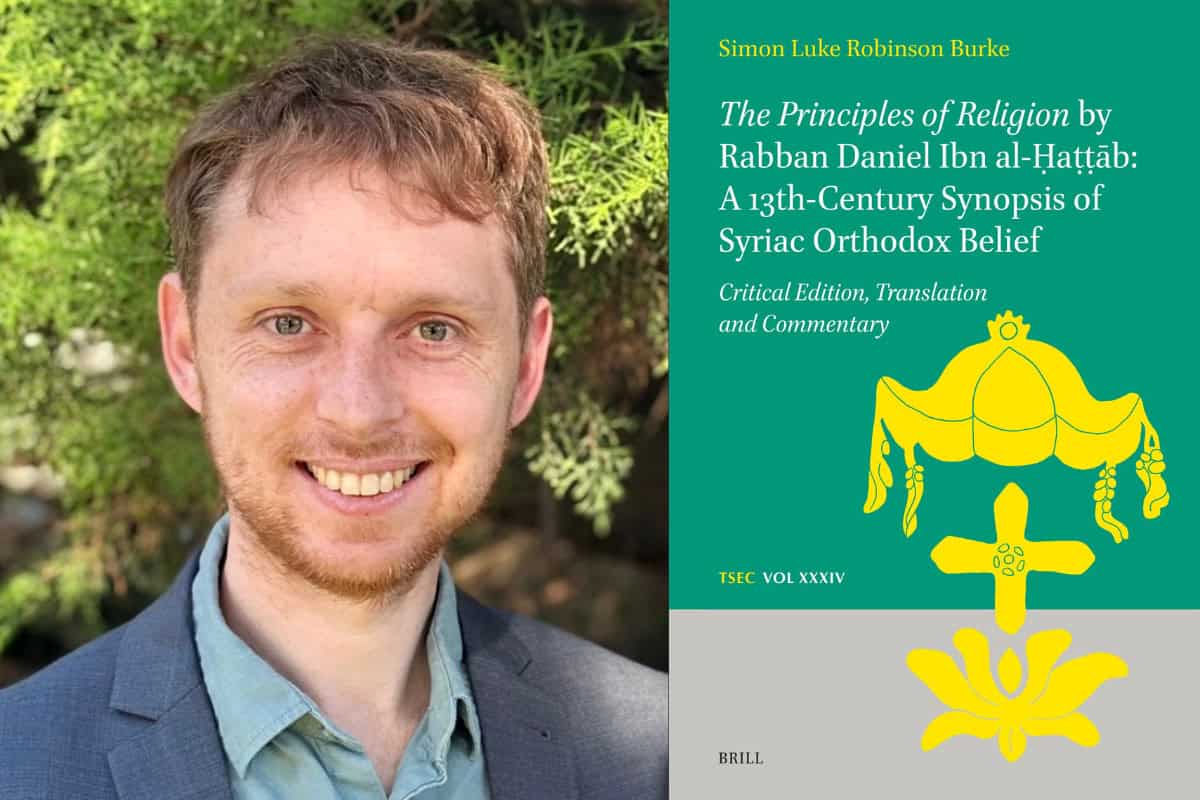
- Dr Simon Luke Robinson Burke for The Principles of Religion by Rabban Daniel Ibn al-Ḥaṭṭāb (13th century), published by Brill.
- Professor Jesper Gulddal for The Labyrinth by Jens Baggesen (1764-1826), published by Oxford University Press.
“Translation allows works shaped in one language and cultural context to enter new conversations across linguistic and geographical boundaries,” said shortlisted translators Aoyama and Bailey. “It gives readers access not only to otherwise inaccessible texts, but to different ways of seeing, thinking, and understanding the world.”
“This medal celebrates the uniquely skilled role of translators, and translations, in Australian literary culture, and the Academy is proud to celebrate ten-years of the award this year,” said Academy President Professor Stephen Garton AM FAHA. “Translators bring patience, knowledge and creativity to texts which, without their skill and dedication, might have remained inaccessible to the anglophone world. This anniversary is a chance to celebrate not just the recipients of this singular award over its first decade, but also the wider community of translators whose work continues to shape how Australians engage with literature, scholarship, and ideas from around the world.”
The recipient of the 2026 Medal for Excellence in Translation will be announced on United Nations International Translation Day, 30 September 2026.
2026 Shortlist:
The Stripper Goddess of Japan: The Life and Afterlives of Ame no Uzume
Tomoko Aoyama FAHA & Penny Bailey
The Stripper Goddess of Japan: The Life and Afterlives of Ame no Uzume is the first complete English translation of the work that Tsurumi Shunsuke (1922–2015), one of postwar Japan’s leading intellectuals, regarded as his most important. Tsurumi explores Ame no Uzume, the trickster goddess whose comic, erotic dance restores light to the world in Japan’s ancient creation narrative. Crossing boundaries of time, space, and genre, the author uncovers Uzume-like figures in unexpected cultural and historical contexts. The book offers an unconventional cultural history of how humour and fearless communication can provide creative responses to conflict, violence, and social constraint.
 Tomoko Aoyama FAHA is an Honorary Associate Professor of Japanese at The University of Queensland. Her research embraces modern and contemporary Japanese literature and culture, comparative literature and translation studies, and she has particular interests in gender and sexuality; parody and intertextuality; and humour and satire. She is the author of Reading Food in Modern Japanese Literature and co-editor of Girl Reading Girl in Japan and Configurations of Family in Contemporary Japan. Aoyama has also published collaborative literary and scholarly translations, including Kanai Mieko’s novels: Indian Summer and Oh, Tama! andTsurumi Shunsuke’s monograph, The Stripper Goddess of Japan.
 Penny Bailey is a Lecturer in Japanese Studies at The University of Queensland. Her research focuses on modern Japanese cultural and intellectual history, and she has particular interests in visual culture, transnational exchange, and translation. Her translations have appeared in Monumenta Nipponica, Review of Japanese Culture and Society, and the recent volume Japan and Japonisme. With Tomoko Aoyama, she is co-translator of The Stripper Goddess of Japan. She has completed a monograph on the Japanese philosopher and cultural theorist Yanagi Sōetsu (1889-1961) and his engagement with Korean visual culture, and is currently developing an English-language anthology of Yanagi’s early twentieth-century writings on Korean art.
The Principles of Religion
Simon Luke Robinson Burke
The Principles of Religion is a 13th-century Middle Arabic work by Rabban Daniel Ibn al-Ḥaṭṭāb, a 13th century monk who drew on religio-philosophical traditions shaped through interaction with Islamic thought and diverse Christian communities to promote Syriac Orthodox beliefs. This book presents the first critical edition, English translation, and commentary of the work, clarifying its historical context and resolving long-standing confusion surrounding Daniel’s identity. The edition is based on fourteen manuscripts, copied over centuries in both Arabic and Syriac scripts and scattered around the world. The translation and commentary guide readers through Daniel’s reasoning, sources, and intellectual milieu.
 Simon Luke Robinson Burke has studied Arabic, Syriac, Hebrew, Sanskrit, and Classical Greek. He is interested in making texts relating to theology and philosophy from diverse historical and cultural contexts accessible, enabling readers to engage with ideas that are often overlooked. Burke has applied himself to learning from the literatures of several traditions of thought, including Syriac Orthodox, East Syriac, Islamic, Jewish, and Vedantic.
The Labyrinth
Jesper Gulddal
The translation of Jens Baggesen’s The Labyrinth (1793-94) introduces anglophone readers to a major classic of Scandinavian literature. In its outer form a travel narrative, it chronicles the author’s journey from Copenhagen through Germany to Switzerland, yet it is less concerned with the sights on the route than with recording the subjective experience of the traveller himself. Baggesen’s sprawling and idiosyncratic work offers a unique portrait of a restlessly thinking, feeling and imagining individual at a threshold moment in European history. Its creative engagement with Laurence Sterne’s A Sentimental Journey also places it within a wider European and British literary tradition.
 Jesper Gulddal is Professor of Literary Studies at the University of Newcastle. As a literary historian, he works within the field of mobility studies and has published books, edited collections and articles on the literary history of movement control and the global circulation of crime fiction. Alongside his academic work, Gulddal is an experienced translator between Danish, German and English, with a particular focus on literature and philosophy. His translation of The Labyrinth draws on a longstanding interest in literary representations of travel and cross-cultural exchange.